




























Skip to content
en
CAD

20% Off on premium paper

Inkjet Papers

Inkjet papers for sharp prints

Discover inkjet papers designed to deliver vibrant colors, crisp details, and dependable results for every project you create.

Our inkjet papers collection offers the perfect foundation for producing professional-quality transfers and printed designs. Engineered for smooth ink absorption and excellent color reproduction, these papers make it easy to achieve detailed graphics with long-lasting performance. Compatible with a variety of inks and printers, they adapt to your workflow while ensuring consistent outcomes across different applications. Whether you are decorating garments, crafting promotional products, or experimenting with new projects, inkjet papers provide flexibility and reliability. Their durable construction minimizes smudging, bleeding, and fading, keeping your prints looking sharp over time. Ideal for small businesses, creative entrepreneurs, and established print shops alike, these papers support efficiency and precision at every stage. With local stock available in North America and Joto’s expert technical support, you can count on fast delivery and trusted guidance for all your printing needs.

Filter

6 products

  • Sort by

Frequently Asked Questions:

What types of inkjet papers does Joto carry, and what printing applications are they designed for?

Joto carries inkjet papers suited for sublimation printing, printable HTV workflows, and specialty transfer applications. This includes sublimation transfer paper for polyester and coated substrate decoration, printable HTV backing papers, and specialty inkjet-compatible transfer media for fabric and hard surface applications. Each paper type is formulated for specific ink chemistry and press workflow combinations.

What DPI and ink density settings produce the sharpest sublimation output on high-release inkjet sublimation paper?

Print sublimation at 1440 dpi for production-quality output — higher resolutions do not improve sublimation results and significantly increase print time. Ink density should be set at 100% without restriction unless your specific ICC profile specifies otherwise. Use the manufacturer-provided ICC profile for your paper, ink, and printer combination loaded in the RIP or Photoshop print dialog, with color management disabled in the printer driver to prevent double-profiling.

Is inkjet sublimation paper compatible with both desktop and wide-format sublimation printers?

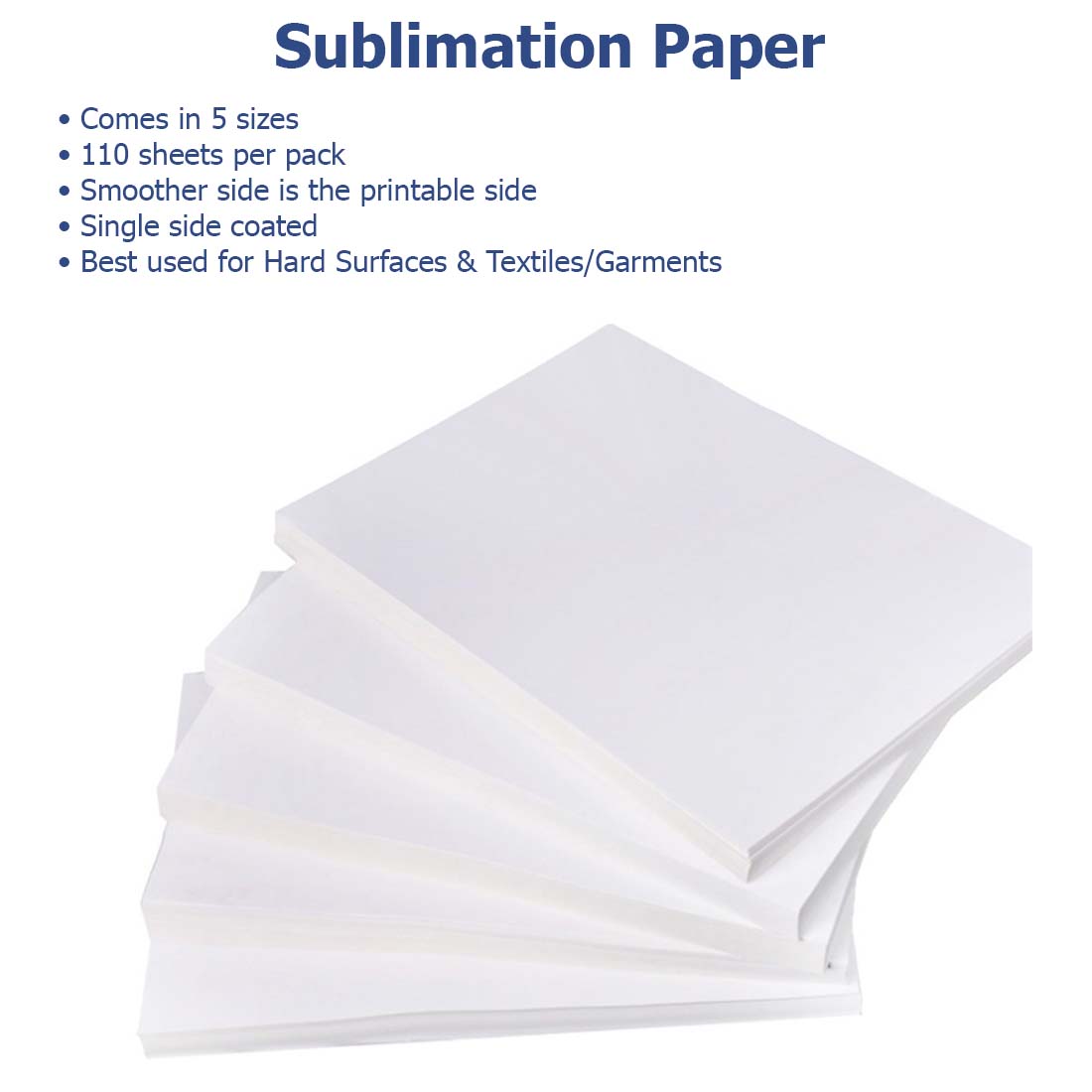
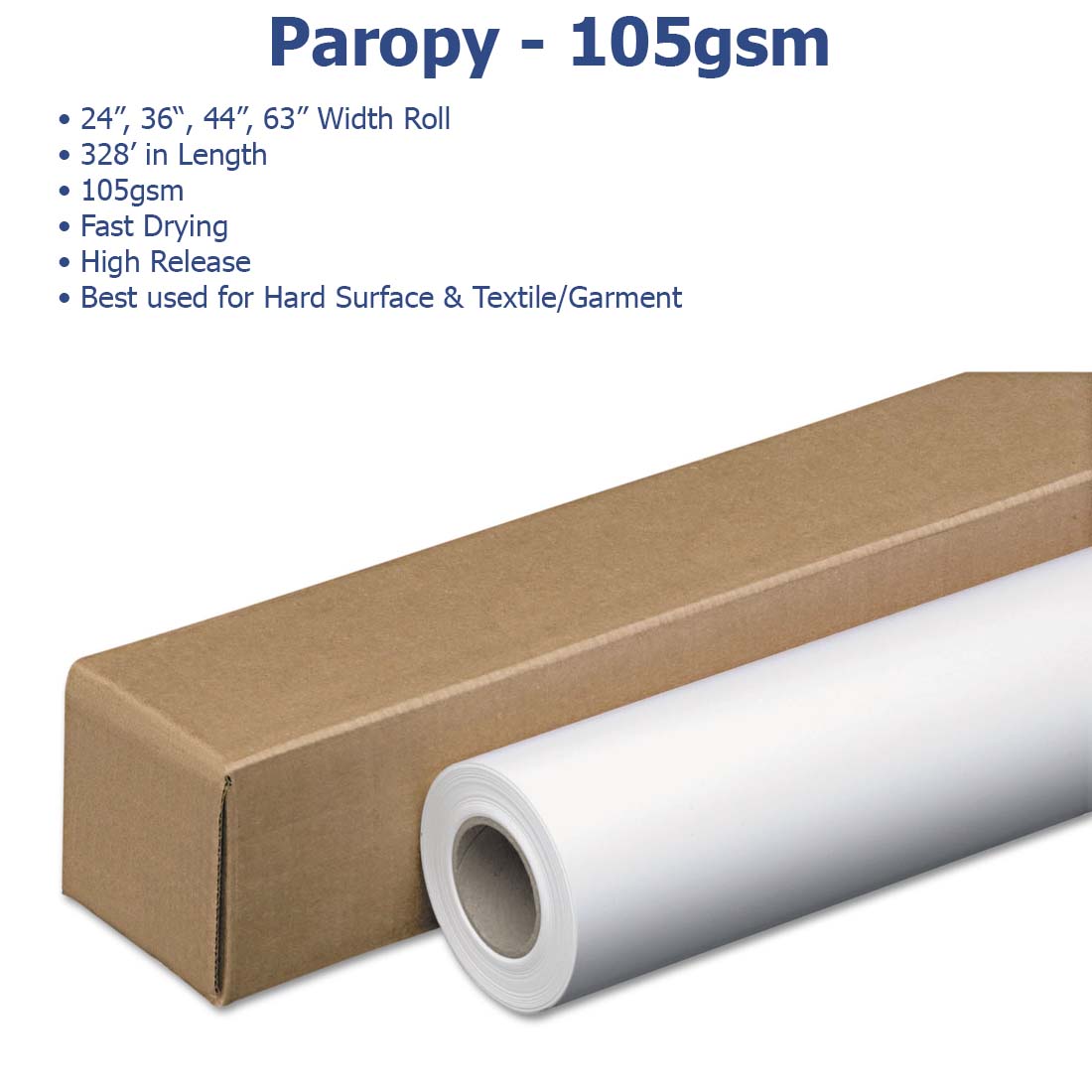
Sublimation paper is available in cut sheet and roll formats for desktop and wide-format printers respectively. Cut sheet paper (letter, legal, A3) feeds through standard desktop sublimation printers; roll paper (24 inch, 44 inch, 64 inch wide) is used in wide-format sublimation systems. Verify that the paper weight (GSM) and roll core size are within your printer's specifications before ordering — most wide-format printers require a 2-inch or 3-inch roll core.

Why is my inkjet sublimation paper feeding unevenly or skewing during printing, causing misaligned designs?

Uneven feeding or skew is almost always caused by paper curl from moisture absorption. Pre-condition paper by storing it in the print room at ambient temperature for 24 hours before use. For cut sheets, fan the stack before loading to separate sheets that have stuck together from humidity. Load paper with the coated (printing) side up in desktop printers — loading the wrong side causes ink to pool on the uncoated surface rather than absorbing, which creates smearing and misfeeds on subsequent sheets.

How does sublimation paper release rate affect the vibrancy and wash durability of the finished print?

High-release sublimation paper transfers a higher percentage of ink to the substrate (90–95%) versus standard paper (75–85%), resulting in deeper colour penetration into the polymer coating and more vibrant finished prints. Greater ink penetration also improves wash durability by increasing the depth of dye bonding in the substrate's polymer layer. For premium hard substrates like dye-sublimation aluminium panels and fine-art polyester canvas, high-release paper produces a noticeably superior result that justifies the higher cost per sheet.

Is buying sublimation inkjet paper in bulk rolls versus cut sheets more cost-effective for a shop printing 1,000 transfers per month?

At 1,000 letter-size transfers per month, bulk roll paper saves approximately 35–50% per square foot compared to individual cut sheet reams. This represents $150–$300 in monthly paper savings at typical pricing. The trade-off is that roll paper requires a wide-format printer with roll feed — the printer investment must be factored into the breakeven calculation. For shops already operating a wide-format sublimation printer, switching to roll paper is one of the highest-return cost reduction steps available.

What is the professional trick to prevent sublimation ink from transferring to the back of the next sheet during stacking after printing?

Freshly printed sublimation paper has wet ink on the surface that can transfer to the next sheet during stacking. Allow prints to air dry for 2–3 minutes before stacking, and always stack face-up with the printed side up to prevent face-to-back contact. For high-volume printing where drying time is a bottleneck, use a hanging rack or wire mesh drying station where prints can dry flat without contact. Never stack more than 10 prints before allowing the bottom sheet to fully dry.

What is the difference between standard inkjet sublimation paper and fast-dry sublimation paper, and when does the fast-dry version pay off?

Fast-dry sublimation paper uses a coating that accelerates ink absorption and surface drying, enabling stacking within 30–60 seconds of printing rather than 2–3 minutes for standard paper. For high-volume desktop printing where operators are handling prints immediately after output, fast-dry paper eliminates ink smear from handling and reduces drying station requirements. At low volume (under 50 prints per day), standard paper's lower cost per sheet makes it the better choice since drying time is not a production bottleneck.

Is sublimation inkjet paper biodegradable, and how should used transfer paper be disposed of after pressing?

Used sublimation transfer paper contains residual sublimation ink and is not accepted in standard paper recycling streams due to its specialty coating and ink content. It should be disposed of in general waste. The paper substrate itself is cellulose-based and will biodegrade in landfill over time, but the coating layer degrades more slowly. Some municipalities accept coated specialty papers in compostable waste programs — check your local waste management guidelines for the correct disposal stream in your area.

How should unused inkjet sublimation paper be stored between production runs to prevent coating degradation?

Reseal opened paper packages immediately after removing the required sheets — use tape or a resealable bag with a silica gel desiccant packet if the original packaging cannot be resealed. Store in a room-temperature environment (65–75°F / 18–24°C) away from direct sunlight, as UV exposure degrades the sublimation coating over time. Avoid storing paper on a concrete floor during Canadian winters, as cold concrete conducts moisture into the paper stack from below — use a shelf or pallet to keep paper elevated off the floor.

Drawer Title
Similar Products