






Skip to content
en
CAD

 🌨️ Please expect delays due to weather conditions ❄️

UV DTF Inks


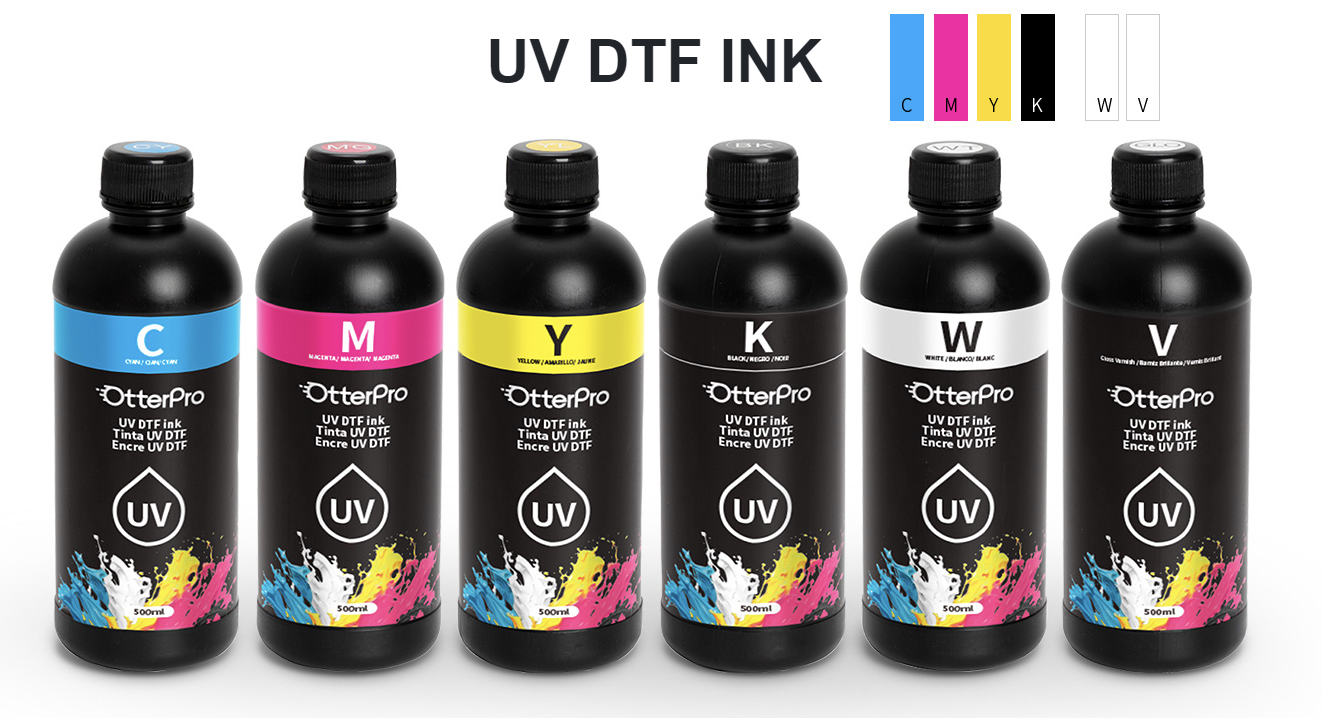
UV DTF Inks for Vivid, Lasting Prints

Produce sharp details and durable results with professional UV DTF Inks.

UV DTF Inks help printers create striking designs on a wide range of surfaces. These inks ensure strong adhesion and vibrant colors that last, giving your products a premium finish. Print shops rely on them to expand offerings, improve quality, and meet customer demand with confidence. Easy to use and consistent in performance, they simplify workflows while maintaining high standards. With Joto Imaging Supplies, you benefit from dependable stock, fast delivery, and expert support to keep your business growing.
Filter

1 product

  • Sort by

FAQs

What are UV DTF Inks and what is their primary use for hard surface decoration?

UV DTF Inks are advanced ultraviolet-curable inks engineered for high-quality direct-to-film printing on a variety of non-porous hard surfaces. These specialized inks enable the creation of durable, full-color decals that can be applied to irregular substrates like glass, metal, and acrylic without the need for a heat press. By utilizing a high-density white ink layer and a vibrant CMYK palette, they ensure exceptional adhesion and scratch resistance for professional-grade customization. This innovative technology streamlines the production of complex graphics, providing a versatile and efficient solution for permanent hard surface decoration.

What surfaces and printer types are compatible with UV DTF Inks?

UV DTF Inks are specifically engineered for compatibility with UV LED printers equipped with Epson-compatible printheads to ensure a smooth, clog-free ink flow and precise curing. These professional-grade inks deliver exceptional adhesion on a wide variety of non-porous hard surfaces, including glass, metal, acrylic, wood, and plastic. For optimal results, they should be used in conjunction with A/B film transfer systems to create durable, scratch-resistant graphics on both flat and cylindrical objects. This advanced formulation from Joto Imaging Supplies allows for high-opacity white layers and a vibrant CMYK finish that cures instantly under ultraviolet light.

How can I ensure the long-term durability and proper maintenance of prints made with UV DTF Inks?

To ensure the long-term durability of transfers created with UV DTF Inks, it is critical to allow the adhesive to bond completely for 24 to 48 hours before subjecting the substrate to heavy use or moisture. For ongoing maintenance, decorated surfaces should be cleaned using a soft, non-abrasive cloth and mild detergent, as harsh chemicals or industrial dishwashers can compromise the UV-cured finish and protective varnish layer. Proper storage of your UV DTF prints in a cool, dry environment also prevents premature peeling, ensuring your high-vibration, scratch-resistant designs maintain their professional quality and vibrant color for years. Following these technical care guidelines will maximize the lifespan and performance of your custom transfers on challenging non-porous surfaces.

How do you properly apply UV DTF Inks to hard surfaces for a professional, long-lasting finish?

To properly apply UV DTF Inks, first print your design onto the specialized A-film using a compatible UV LED printer and then laminate it with the B-film carrier. Before application, ensure the target hard surface is thoroughly cleaned with alcohol to remove dust and oils, which is critical for achieving professional-grade adhesion. Firmly press the prepared transfer onto the substrate using a squeegee to eliminate air bubbles before carefully peeling away the carrier film to reveal a vibrant, high-gloss finish. This cold transfer process from Joto Imaging Supplies provides a durable, scratch-resistant branding solution for irregular surfaces without the need for a heat press.

What are the most common causes of poor ink adhesion or curing issues when using UV DTF Inks?

Poor ink adhesion and curing issues with UV DTF Inks typically result from inadequate surface preparation, such as residual oils or dust on the substrate, or the use of incompatible materials. Technically, improper UV lamp intensity or incorrect curing speeds can lead to under-curing, which leaves the ink tacky, or over-curing, which makes the adhesive brittle and prone to cracking. Environmental factors like high humidity and aged UV LED lamps also significantly impact the chemical reaction required for a durable, long-lasting bond. To ensure professional results, Joto Imaging Supplies recommends cleaning substrates with isopropyl alcohol and calibrating your printer settings to match the specific curing thresholds of your UV-curable inks.

How can I achieve maximum color vibrancy and professional print quality with UV DTF Inks?

To achieve maximum color vibrancy and professional results with UV DTF Inks, ensure your designs are high-resolution at 300 DPI and utilize the correct ICC color profiles within your RIP software. Optimize your printer settings by setting the resolution to at least 1440 DPI and adjusting white ink density to provide a solid, opaque base for CMYK layers on dark or transparent substrates. Maintain consistent printhead performance through regular nozzle checks and environmental control of temperature and humidity to prevent ink flow issues. Finally, calibrate your UV lamp intensity to ensure a full cure, preserving the rich color saturation and scratch-resistant finish on various hard surface substrates.

How can using UV DTF Inks help my business reduce production costs and increase profit margins?

UV DTF inks reduce production costs by removing the necessity for expensive screens, emulsions, or labor-intensive weeding processes associated with traditional decoration. The direct-to-film method streamlines your workflow, enabling the efficient production of high-quality transfers for irregular hard surfaces with significantly reduced setup time. By maximizing ink yield and minimizing material waste, these UV LED-curable inks drive higher profit margins on both small-batch and custom branding projects. This high-performance system ensures rapid delivery to your clients while maintaining industry-leading durability and exceptional color vibrancy.

How should UV DTF Inks be stored to maintain their quality and ensure user safety?

UV DTF Inks must be stored in a climate-controlled environment with temperatures between 18°C and 25°C and humidity levels ranging from 55% to 65% to prevent premature cross-linking and maintain optimal viscosity. To protect the chemical integrity of the UV-curable pigments, keep all ink containers tightly sealed in a dark, well-ventilated area away from direct sunlight and potential heat sources. For maximum user safety and to avoid contamination, always handle the inks with protective gloves and store them in their original opaque bottles on stable, corrosion-resistant shelving. Implementing a first-in, first-out (FIFO) inventory system ensures you are consistently using the freshest ink for high-quality, professional hard-surface transfers.

How do UV DTF Inks compare to traditional screen printing or vinyl transfers for hard surface decoration?

UV DTF Inks offer a superior alternative to traditional screen printing and vinyl transfers by providing high-resolution, full-color graphics without the need for screens, weeding, or complex layering. Unlike vinyl, which can lift on curved surfaces, these UV-curable inks create a durable, "printed-on" finish with exceptional adhesion to irregular and non-porous hard substrates. This technology significantly reduces labor costs and setup time, making it highly efficient for detailed, multi-color designs while providing a premium, raised varnish effect. By utilizing UV LED-curable chemistry, businesses can achieve professional-grade scratch resistance and a faster production turnaround compared to traditional decoration methods.

How can you fine-tune UV lamp intensity and ink layering sequences to achieve high-build tactile effects with UV DTF Inks while ensuring maximum adhesion on curved, low-surface-energy substrates?

To achieve high-build tactile effects with UV DTF Inks, stack multiple varnish layers using a low-speed print setting and precise RIP software control to ensure defined 3D textures. For maximum adhesion on curved, low-surface-energy substrates, use a medium-low UV lamp intensity during initial passes to prevent film warping while facilitating a robust chemical bond between ink layers. It is critical to clean the target surface with isopropyl alcohol or apply a compatible primer to enhance bonding strength before firmly pressing the transfer with a squeegee. This technical calibration ensures a professional, embossed finish that remains durable and scratch-resistant on even the most challenging non-porous surfaces.

Drawer Title
Similar Products